Create a digital twin
A consistent, high-resolution record by tray and depth.
 Talk to a specialist
LithoScan is Scient’s high-throughput drill-core scanning solution, delivered with LithoScope software for advanced hyperspectral analytics, to generate a consistent, high-resolution digital core record and produce mineral, alteration, and elemental outputs at a pace that fits real exploration and mining workflows.
Talk to a Specialist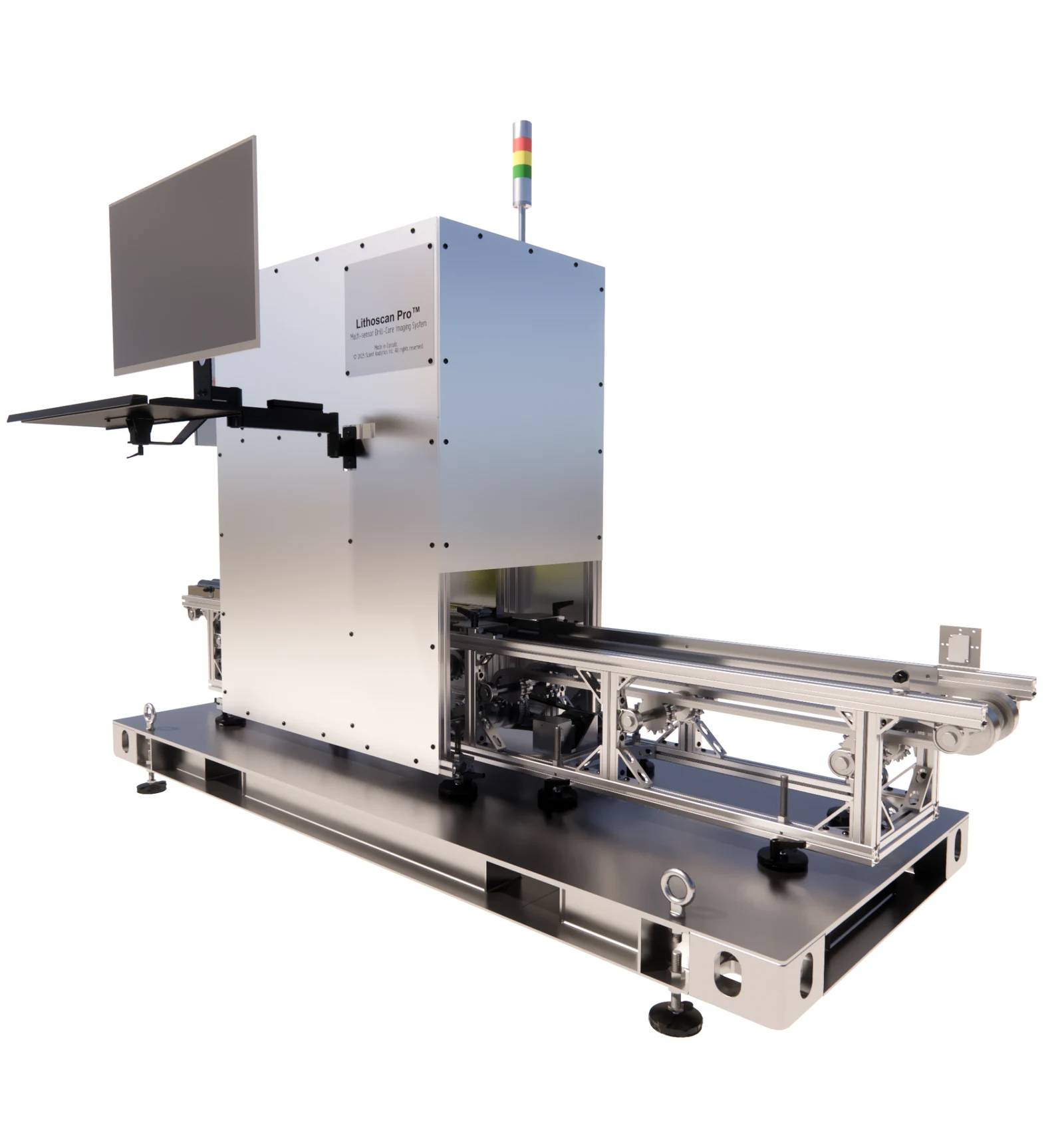
A consistent, high-resolution record by tray and depth.
Real-time data capture and streamlined reporting from drilling to interpretation.
Hyperspectral and elemental analytics for mineral and alteration patterns.
A structured, searchable digital core library across teams.
Elemental maps and geochemistry reports with integrated XRF.
Consistent capture geometry and repeatable measurement workflows.
Detailed sensor specifications from the brochure, presented on the LithoScan product page for technical buyers and deployment planning.
| Feature | Primary variability captured | Measurement range | Spectral sampling / bands | Spatial resolution | Best used for |
|---|---|---|---|---|---|
| Visible / VNIR | Fe-oxides and hydroxides; Fe-bearing silicates; manganese oxides and some sulfides via colour; organic cover vs bare rock | 350–1000 nm | ~5.4 nm sampling; ~288 bands | down to ~50 µm | Oxidation zones, gossans, laterites, hematitic vs goethitic caps, exposed rock vs cover |
| SWIR hyperspectral | Al-OH white mica group; Mg/Fe-OH chlorite/epidote; clays; carbonates; sulfates | 900–2500 nm | ~1.69 nm sampling; ~447 bands | down to ~400 µm | Hydrothermal alteration zoning, carbonates, clays, sulfates, and vectoring workflows |
| RGB camera | True-colour texture and visual context | Visible | N/A | down to ~2.5 µm | Visual logging context and core/sample documentation |
| Laser profiler | Surface geometry: height, breaks, roughness | FOV up to ~2 m | N/A | down to 1 mm | 3D surface and break maps, roughness, volume estimates, and RQD-assist metrics |
| XRF | Elemental chemistry and ratios | Element range | Energy channels | down to ~20 µm | Spot elemental measurements, QA/QC zoning, and reconciliation vs lab assays |